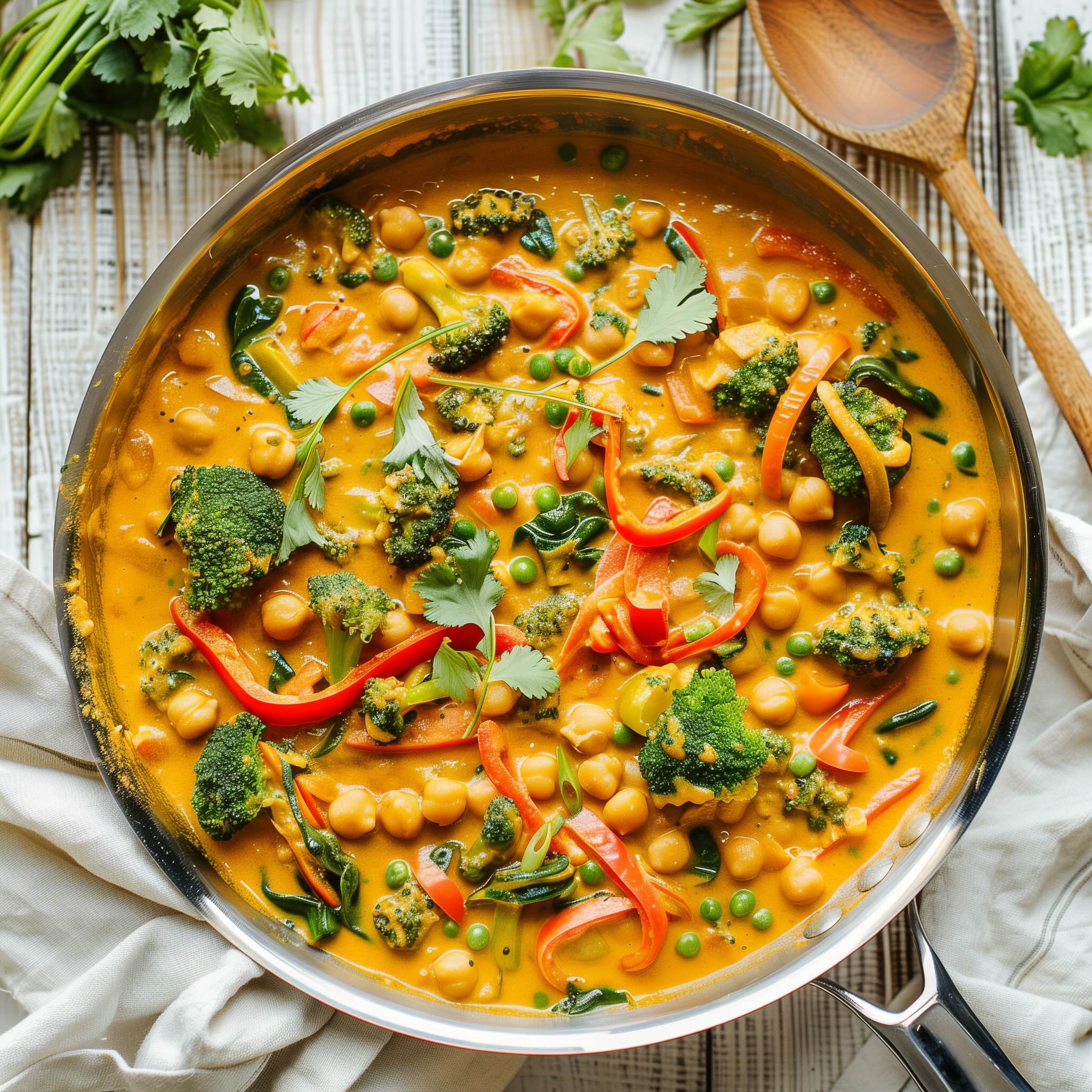
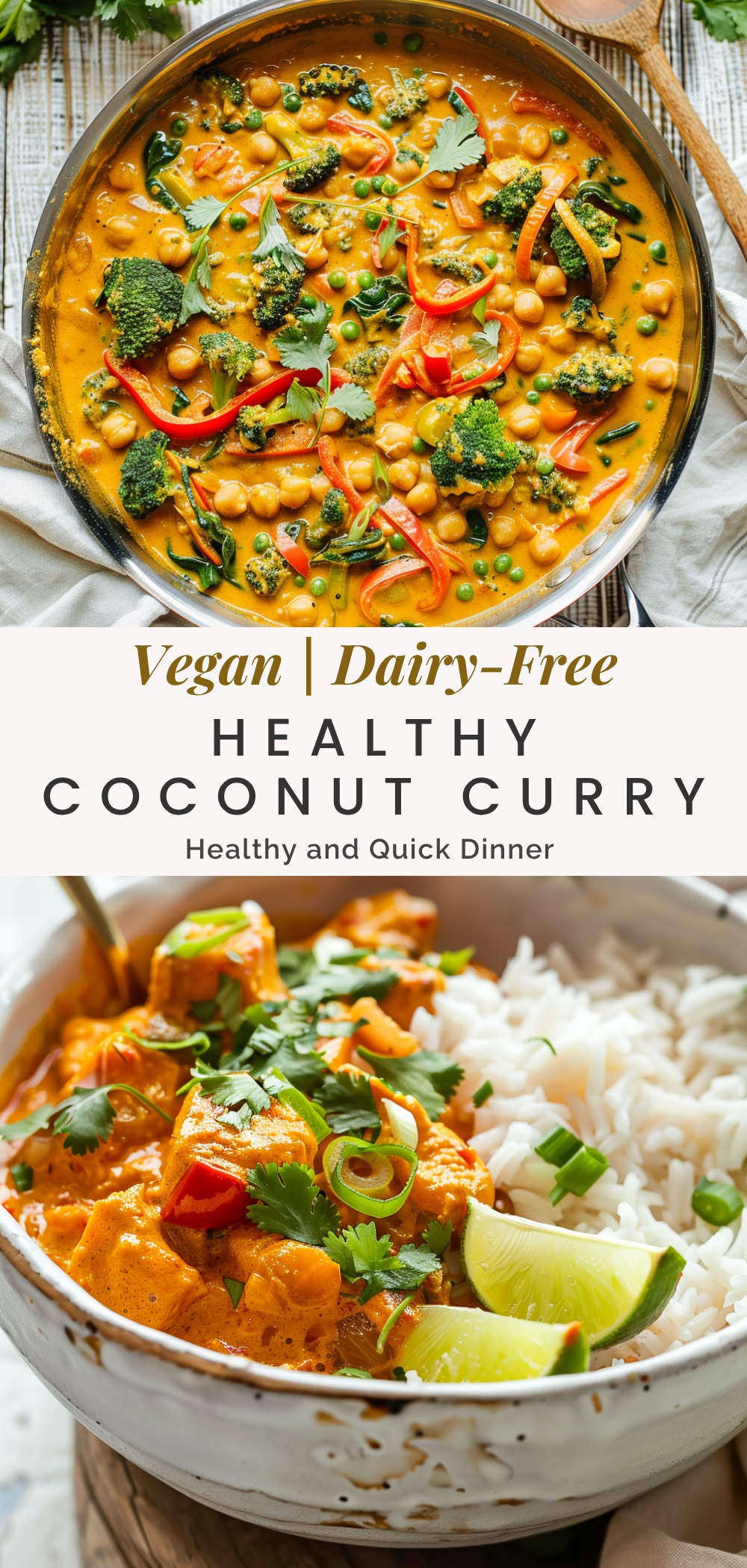
There are weeknight dinners, and then there is this vegan coconut curry. Rich, creamy, full of color, and somehow ready in thirty minutes flat — this is the recipe I find myself coming back to again and again when I want something that feels indulgent but is genuinely good for me. If you’ve ever been intimidated by curry, this one is going to change your mind. It’s made with pantry staples, one pan, and a set of simple steps that make it completely foolproof, whether you’re brand new to plant-based cooking or a longtime lover of everything coconut.
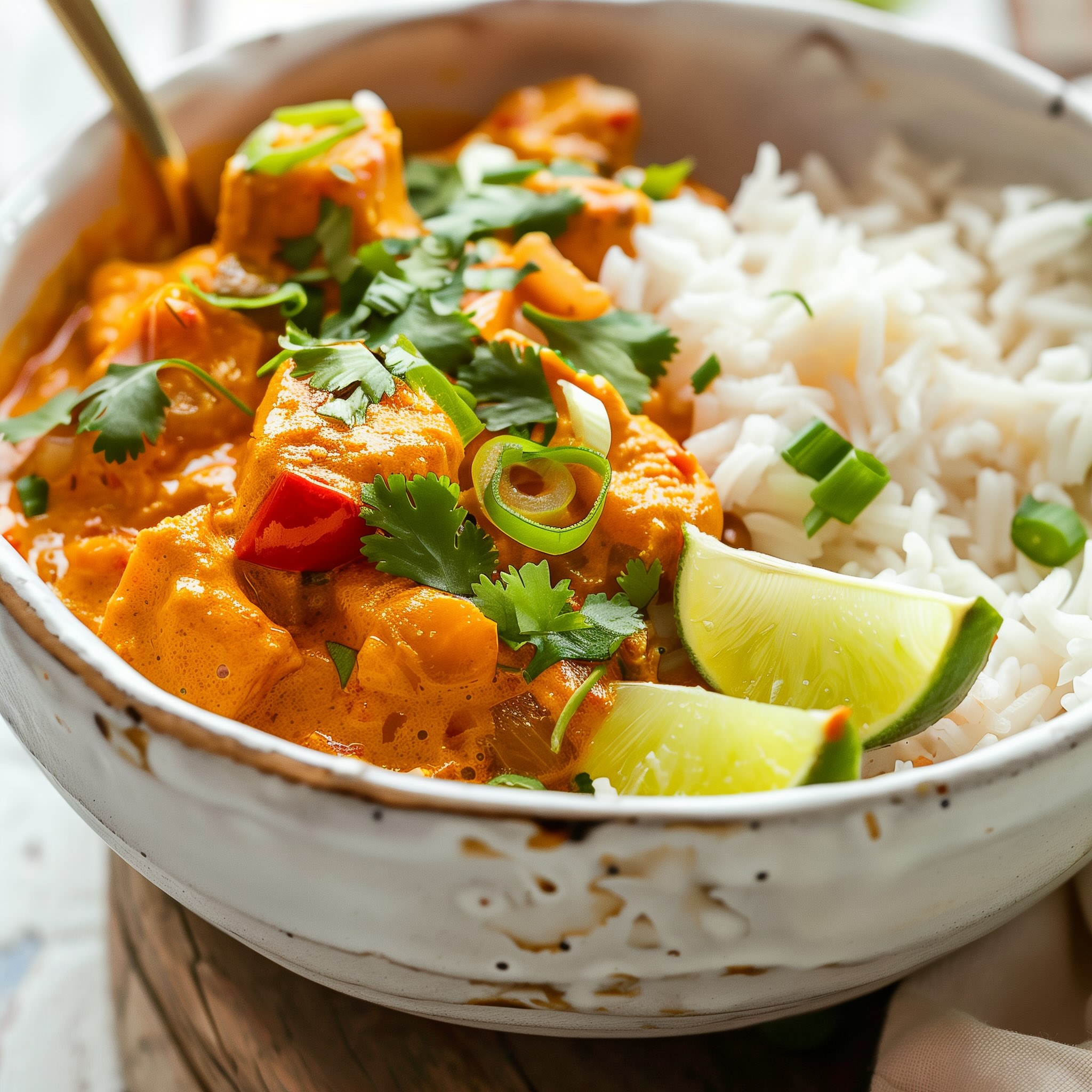
What makes this version special is the combination of canned chickpeas for plant-based protein, a colorful mix of vegetables that stay tender but not mushy, and a sauce built from Thai red curry paste and full-fat coconut milk. The result is a deeply flavorful, slightly spicy, incredibly silky sauce that clings to every single bite. Served over fluffy basmati rice with a squeeze of fresh lime juice and a handful of cilantro, it tastes like something you’d order at your favorite neighborhood restaurant — except you made it yourself in under thirty minutes.
This vegan coconut curry is also naturally gluten-free and dairy-free, which makes it a great option if you’re cooking for a crowd with mixed dietary needs. It reheats beautifully, making it a meal prep MVP, and it’s endlessly customizable based on whatever vegetables you happen to have on hand. It’s the kind of recipe that earns a permanent spot in your weekly rotation.
Why This Recipe Is So Good
There are a lot of curry recipes out there — so let me tell you why this one stands out:
It comes together in one pan. There’s minimal cleanup, which means more time eating and less time at the sink.
The sauce is genuinely creamy. Full-fat canned coconut milk is non-negotiable here. It gives the sauce that thick, luscious texture that makes the whole dish feel restaurant-quality.
The chickpeas bring the protein. Canned chickpeas make this recipe incredibly convenient, but they also pack in fiber and plant-based protein, making this a truly satisfying meal rather than a light side dish.
It’s built for real life. You can use whatever vegetables are in your fridge. Frozen vegetables work just as well as fresh. And if your brand of curry paste is milder or spicier than mine, you can adjust on the fly.
The leftovers might be even better. Like most curries, this one deepens in flavor overnight. Make a batch on Sunday and you have lunches and dinners sorted for the week.
3–4 cups cooked basmati rice (or cauliflower rice for a lower-carb option)
Fresh cilantro, chopped
Sliced green onions
Lime wedges
Instructions
Step 1: Sauté Your Aromatics
Heat the coconut oil in a large skillet or wide saucepan over medium heat. Add the diced onion and a pinch of salt and cook, stirring occasionally, until the onion is soft and translucent — about 4 to 5 minutes. Add the garlic and grated ginger and cook for another 30 seconds until fragrant. Don’t rush this step; those aromatics are the flavor foundation for the whole dish.
Step 2: Add the Curry Paste
Add the red curry paste directly to the pan and stir it into the onion mixture. Cook for about 1 minute, letting the paste toast slightly in the oil. This step is what really wakes up all those spices and transforms the base into something deeply savory and aromatic. Your kitchen is going to smell incredible at this point.
Step 3: Add the Vegetables
Add the sliced red bell pepper, broccoli florets, and carrot to the pan. Stir everything together to coat the vegetables in the curry paste. Cook for 2 to 3 minutes over medium heat, just to give the vegetables a head start before the liquid goes in.
Step 4: Add the Coconut Milk and Chickpeas
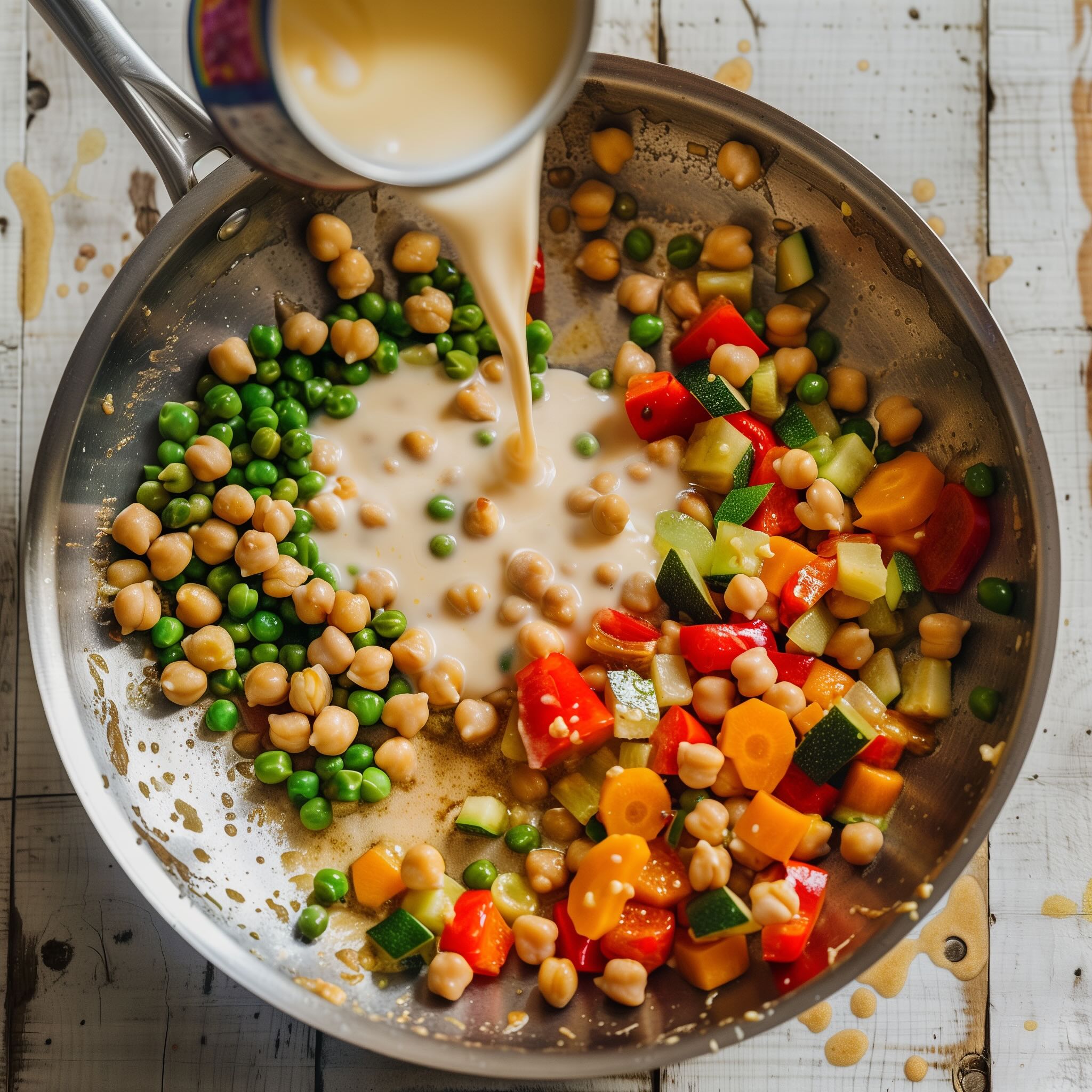
Pour in the full-fat coconut milk and vegetable broth. Add the drained chickpeas. Stir well to dissolve the curry paste into the liquid. Add the coconut aminos and maple syrup, then season with salt and black pepper. Bring the mixture up to a gentle boil, then reduce the heat to a simmer.
Step 5: Simmer Until Tender
Let the curry simmer uncovered over low-medium heat for 10 to 12 minutes, or until the vegetables are tender and the sauce has thickened slightly. Stir occasionally to make sure nothing sticks to the bottom. If the sauce gets too thick, add a splash more vegetable broth.
Step 6: Finish and Serve
Stir in the baby spinach and cook for another 1 to 2 minutes until just wilted. Squeeze in the lime juice and taste for seasoning — add more salt, pepper, or a touch more curry paste if you’d like. Ladle into bowls over rice, and garnish with fresh cilantro, green onions, and extra lime wedges. Dig in.
Tips for Success
Use full-fat coconut milk. I know it’s tempting to reach for the light version, but the fat content is what gives this curry its silky, restaurant-quality consistency. Light coconut milk will produce a thinner, less satisfying sauce.
Don’t skip the lime. A squeeze of fresh lime juice at the end brightens all the flavors and brings everything into balance. It makes a bigger difference than you might think.
Check your curry paste label. Most Thai red curry pastes are vegan, but some brands include shrimp paste. Thai Kitchen’s red curry paste is vegan and easy to find at most grocery stores.
Cut your vegetables evenly. Keeping everything a similar size means the vegetables cook at the same rate, so you don’t end up with some pieces mushy and others still hard.
Let it rest for a few minutes before serving. Like most saucy dishes, this curry settles and thickens slightly as it sits. Serving it a few minutes after it’s done gives you a slightly richer sauce in the bowl.
Start the rice when you start the curry. Basmati rice takes about 15 to 18 minutes — cook it simultaneously and both will finish at the same time.
Storage Instructions
Refrigerator: Store leftover vegan coconut curry in an airtight container in the fridge for up to 4 to 5 days. The flavor genuinely deepens overnight, making it an excellent lunch the next day.
Freezer: This curry freezes beautifully. Transfer cooled curry to a freezer-safe container or zip-lock bag and freeze for up to 3 months. Thaw in the fridge overnight before reheating.
Reheating: Reheat on the stovetop over low-medium heat, adding a splash of vegetable broth or coconut milk if the sauce has thickened. You can also reheat individual portions in the microwave in 90-second intervals.
Storage Tip: Store the curry and rice separately for best results. Rice can become mushy when stored together with a saucy dish.
Variations
Swap the protein. Not feeling chickpeas? Cubed extra-firm tofu (pan-fried first for crispy edges) is a fantastic substitute. You can also use white beans, lentils, or soy curls.
Change up the vegetables. This recipe is incredibly flexible. Cauliflower, zucchini, snap peas, baby corn, sweet potato, or mushrooms all work beautifully. Use whatever you have on hand or whatever looks best at the market.
Make it creamier. For an extra luxurious sauce, swap in one can of coconut cream in place of the coconut milk.
Adjust the heat level. Start with 1 tablespoon of red curry paste for a mild curry, or increase to 3 tablespoons if you love things spicy. A pinch of red pepper flakes or a fresh sliced Thai chili can also add heat.
Try a different curry paste. Green or yellow curry paste work just as well here for a totally different flavor profile. Green is more herbal and bright; yellow is mellow and slightly sweet.
Serve it differently. Try it over cauliflower rice for a lower-carb version, or with rice noodles or quinoa for something different. Vegan naan on the side is always a good call.
FAQ
Is vegan coconut curry healthy?
Yes! This recipe is loaded with plant-based protein from chickpeas, fiber from the vegetables, and healthy fats from coconut milk. It’s naturally dairy-free, gluten-free, and free from refined sugars. A single serving clocks in at around 380–400 calories, with over 10 grams of protein and more than 8 grams of fiber.
Can I make this vegan coconut curry in the Instant Pot?
Absolutely. Use the sauté function to cook the aromatics and curry paste, then add all remaining ingredients and pressure cook on high for 5 minutes. Do a quick release and stir in the spinach and lime juice at the end.
Can I make this in a slow cooker?
Yes — sauté the onion, garlic, ginger, and curry paste on the stovetop, then transfer to a slow cooker with the remaining ingredients (except spinach and lime). Cook on low for 6 to 7 hours or high for 3 to 4 hours. Stir in spinach and lime just before serving.
What can I serve with vegan coconut curry?
Basmati rice is the classic pairing and hard to beat. Cauliflower rice, jasmine rice, quinoa, or rice noodles all work. Vegan naan or a side of steamed bok choy or broccoli round out the meal nicely.
Is Thai red curry paste gluten-free?
Thai Kitchen red curry paste is gluten-free. Always check the label of whatever brand you’re using to confirm, as formulations vary.
How do I thicken my coconut curry sauce?
If you’d like a thicker sauce, mix 1 tablespoon of cornstarch with 2 tablespoons of cold water and stir it into the simmering curry. It will thicken within a couple of minutes. Alternatively, let the curry simmer uncovered for a few extra minutes to reduce naturally.
Does vegan coconut curry freeze well?
Yes, it freezes very well for up to 3 months. Freeze without the rice for best results.
Final Thoughts
This vegan coconut curry is one of those recipes that checks every box: quick, healthy, satisfying, and genuinely delicious. Whether you’re cooking for a weeknight dinner, batch-cooking for the week, or feeding guests with different dietary needs, it delivers every single time. Make it once and you’ll understand why curry earns a permanent spot in just about every cuisine around the world.
This vegan coconut curry is rich, creamy, and on the table in 30 minutes. Packed with colorful veggies, chickpeas, and a dreamy coconut milk sauce — it’s gluten-free, dairy-free, and totally weeknight-proof.
3–4cups cooked basmati rice (or cauliflower rice for a lower-carb option)
Fresh cilantro, chopped
Sliced green onions
Lime wedges
Instructions
Heat coconut oil in a large skillet over medium heat. Add diced onion and a pinch of salt. Cook 4–5 minutes until soft and translucent.
Add garlic and ginger. Cook 30 seconds until fragrant.
Add red curry paste and stir into the onion mixture. Cook 1 minute, letting the paste toast in the oil.
Add bell pepper, broccoli, and carrot. Stir to coat in the curry paste and cook 2–3 minutes.
Pour in coconut milk and vegetable broth. Add chickpeas, coconut aminos, and maple syrup. Season with salt and pepper. Stir well and bring to a gentle boil.
Reduce heat and simmer uncovered for 10–12 minutes, stirring occasionally, until vegetables are tender and sauce has thickened slightly.
Stir in baby spinach and cook 1–2 minutes until wilted. Squeeze in lime juice and taste for seasoning.
Serve over basmati rice and garnish with cilantro, green onions, and lime wedges.
Notes
Use full-fat coconut milk for the creamiest sauce.
To make it spicier, increase to 3 tablespoons of curry paste or add a pinch of red pepper flakes.
Swap chickpeas for cubed pan-fried tofu, white beans, or lentils.
Store leftovers in the fridge for up to 5 days or freeze for up to 3 months.
For a lower-carb option, serve over cauliflower rice.