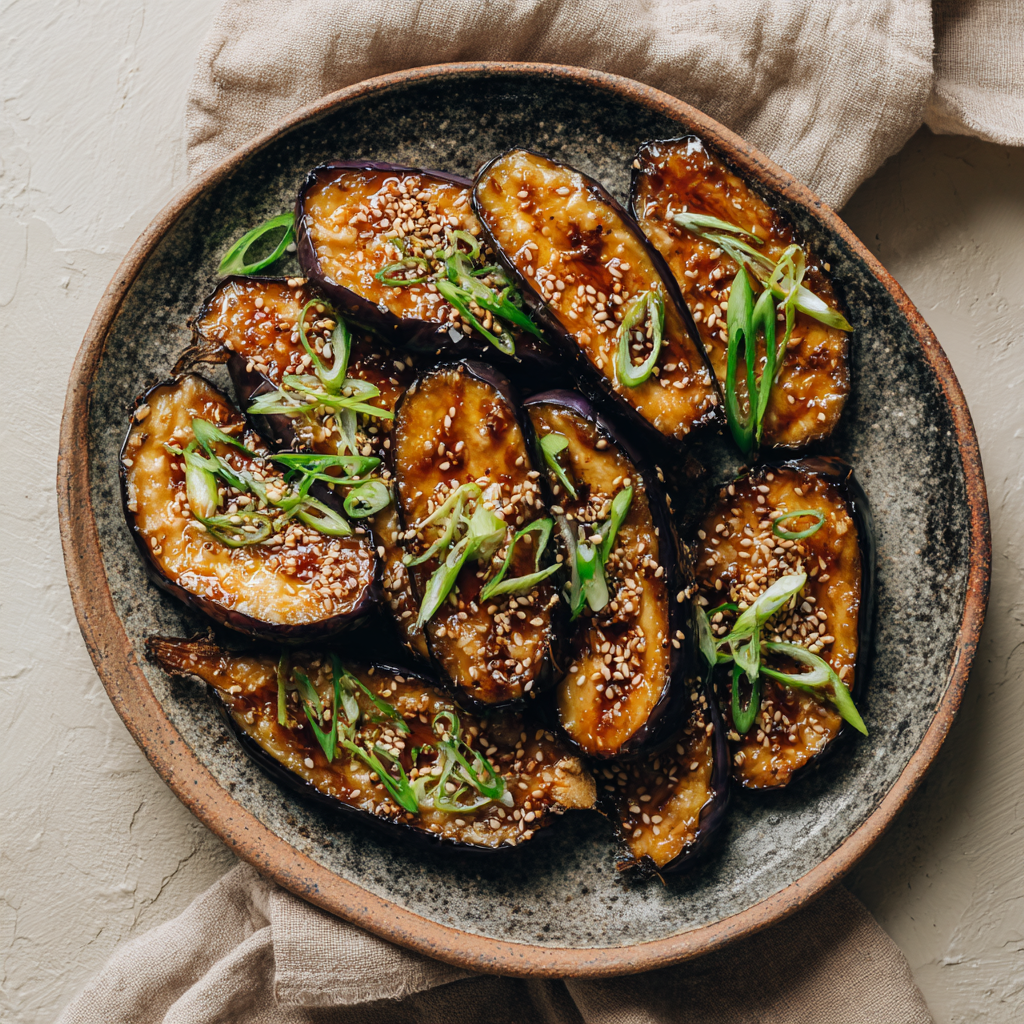
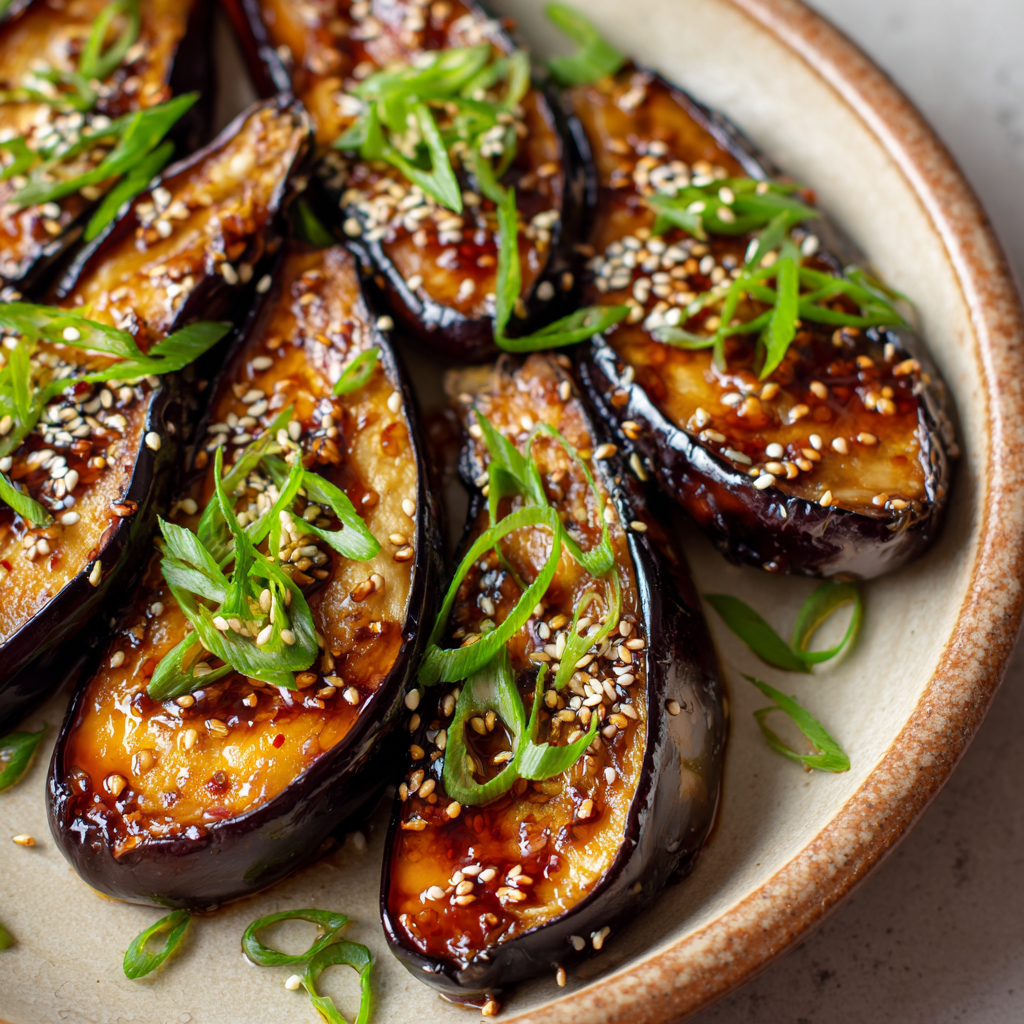
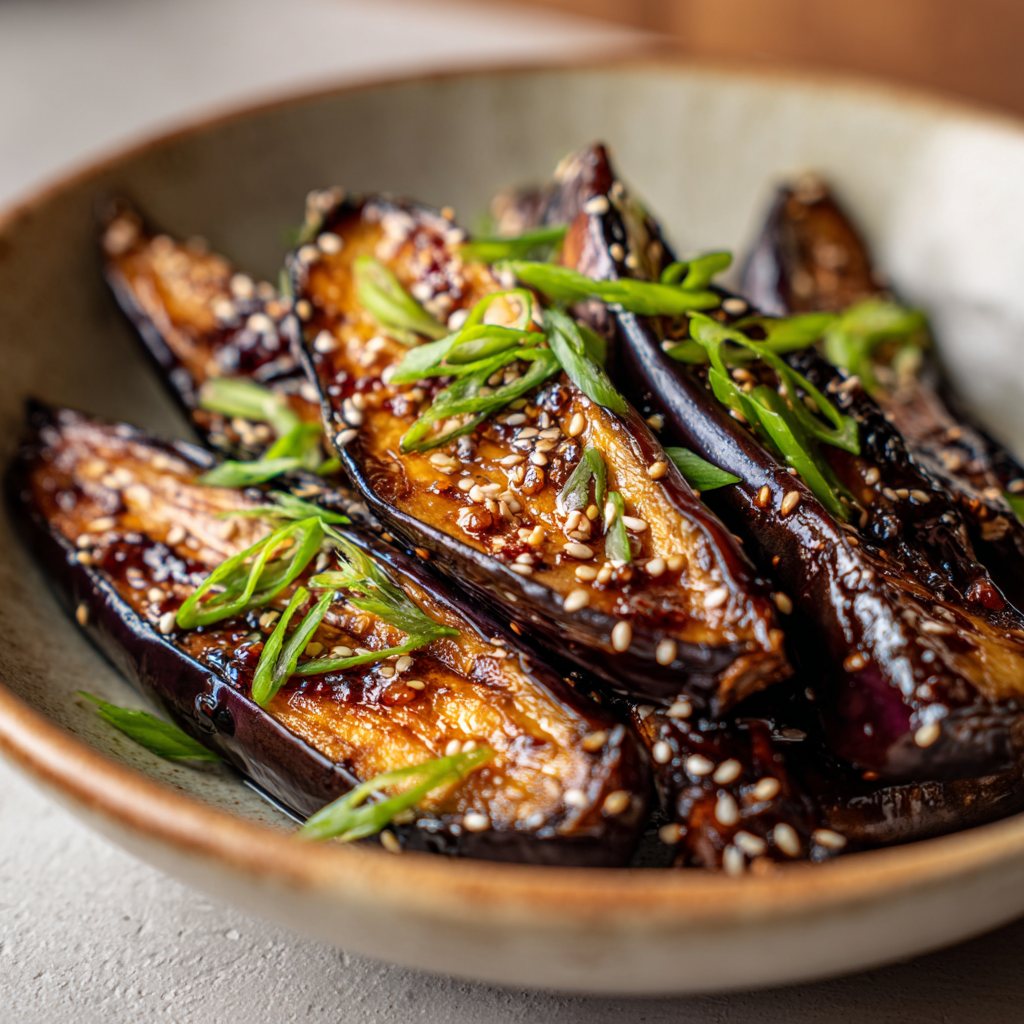
If you’re looking for a restaurant-quality dish that’s surprisingly simple to make at home, this miso glazed eggplant is exactly what you need. Tender Japanese eggplant is brushed with a sweet and savory miso glaze, then roasted until perfectly caramelized with crispy edges. The result is a deeply flavorful side dish or main that’s both comforting and nourishing.
This recipe came about when I was craving something rich and satisfying but wanted to keep things plant-based and wholesome. Miso paste brings that incredible umami depth that makes every bite feel indulgent, while the natural sweetness of the glaze balances everything beautifully. Whether you’re serving this alongside grilled protein or making it the star of a grain bowl, it never disappoints.
The best part? This miso glazed eggplant comes together in just 30 minutes with minimal prep work. It’s naturally vegan and gluten-free (when using tamari), making it perfect for anyone following a clean eating lifestyle or simply looking to add more vegetables to their rotation.
Why This Recipe Is So Good
There’s something truly magical about the combination of miso and eggplant. The creamy texture of roasted eggplant acts as the perfect canvas for the bold, savory-sweet glaze that caramelizes in the oven. When you take that first bite, you get crispy, slightly charred edges giving way to silky, melt-in-your-mouth flesh that’s absorbed all that umami goodness.
What makes this recipe stand out is its versatility and accessibility. You don’t need any special cooking techniques or hard-to-find ingredients—just quality miso paste and fresh eggplant. The glaze itself is a beautiful balance of fermented depth from the miso, subtle sweetness from maple syrup, and a hint of tang from rice vinegar. It’s the kind of flavor profile that makes you want to lick the plate clean.
This dish also happens to be incredibly nutrient-dense. Eggplant is rich in antioxidants and fiber, while miso provides probiotics that support gut health. You’re getting a meal that tastes indulgent but actually nourishes your body from the inside out. Plus, it’s substantial enough to serve as a vegetarian main but elegant enough for entertaining.
Ingredients
For the Eggplant:
2 large Japanese or Chinese eggplants (about 1 pound total)
Preheat your oven to 425°F (220°C) and line a baking sheet with parchment paper. Cut the eggplants in half lengthwise and score the flesh in a crosshatch pattern, being careful not to cut through the skin. This helps the glaze penetrate and speeds up cooking time. Brush both sides lightly with avocado oil.
Step 2: Make the Miso Glaze
In a small bowl, whisk together the miso paste, maple syrup, tamari, rice vinegar, sesame oil, minced garlic, and grated ginger until smooth and well combined. If the mixture seems too thick, add a tablespoon of water to reach a brushable consistency. The glaze should be pourable but not too runny.
Step 3: Initial Roasting
Place the eggplant halves cut-side up on the prepared baking sheet. Brush a generous amount of the miso glaze over the scored flesh, making sure it gets into all the cuts. Reserve about half of the glaze for later. Roast in the preheated oven for 15 minutes until the eggplant begins to soften.
Step 4: Second Glaze and Final Roasting
Remove the baking sheet from the oven and brush the remaining glaze over the eggplant. Return to the oven and roast for another 10-15 minutes until the eggplant is completely tender when pierced with a fork and the glaze has caramelized beautifully. The edges should be slightly crispy and golden brown.
Step 5: Garnish and Serve
Transfer the miso glazed eggplant to a serving platter. Sprinkle generously with sesame seeds and sliced green onions. Serve immediately while hot, allowing the beautiful caramelized glaze to shine. This pairs wonderfully with steamed rice, cauliflower rice, or as part of a larger Asian-inspired meal.
Tips for Success
Choose the Right Eggplant: Japanese or Chinese eggplants work best for this recipe because they’re naturally sweeter and less bitter than globe eggplants. They also have fewer seeds and a creamier texture when roasted. Look for firm eggplants with smooth, shiny skin.
Don’t Skip the Scoring: The crosshatch pattern isn’t just for looks—it allows the glaze to penetrate deep into the flesh and helps the eggplant cook more evenly. Just be gentle and don’t cut all the way through the skin, which helps the eggplant hold its shape.
Watch the Glaze Closely: The line between perfectly caramelized and burnt can be thin. Keep an eye on your eggplant during the final 10 minutes of cooking. If the glaze is browning too quickly, tent loosely with foil.
Quality Miso Matters: Use a good-quality white or yellow miso paste for the best flavor. White miso is milder and slightly sweeter, while yellow miso has a bit more depth. Avoid red miso for this recipe as it can be too intense and salty.
Make Extra Glaze: This miso glaze is so delicious, you’ll want to drizzle extra over rice or use it on other vegetables. Consider doubling the glaze recipe and keeping the extra in the fridge for up to two weeks.
Storage Instructions
Store leftover miso glazed eggplant in an airtight container in the refrigerator for up to 4 days. The eggplant will soften slightly as it sits, but the flavors actually deepen and become even more delicious.
To reheat, place the eggplant on a baking sheet and warm in a 350°F oven for about 10 minutes until heated through. You can also reheat in a skillet over medium heat, though the texture will be softer than oven reheating. Avoid microwaving if possible, as it can make the eggplant mushy.
This dish is best enjoyed fresh for optimal texture, but it’s still incredibly flavorful as leftovers. You can also chop up leftover miso glazed eggplant and add it to grain bowls, noodle dishes, or serve it cold as part of a bento box.
The miso glaze can be made ahead and stored separately in an airtight container in the refrigerator for up to 2 weeks, making this recipe even easier for meal prep.
Variations and Substitutions
Spicy Miso Glazed Eggplant: Add 1-2 teaspoons of sriracha or sambal oelek to the glaze for a spicy kick. You can also sprinkle red pepper flakes over the finished dish.
Sesame Miso Eggplant: Increase the sesame oil to 2 teaspoons in the glaze and add 1 tablespoon of tahini for extra nutty richness and a creamier texture.
Herb-Topped Version: Finish the dish with fresh cilantro, Thai basil, or shiso leaves instead of green onions for a different flavor profile.
Protein Addition: While this recipe is vegan, you can serve it alongside grilled salmon, chicken thighs, or crispy tofu to make it a complete meal.
Different Vegetables: This glaze works beautifully on other vegetables too. Try it with halved baby bok choy, thick slices of cauliflower, or even mushroom caps for variety.
Air Fryer Method: Cook the glazed eggplant in an air fryer at 380°F for 12-15 minutes, brushing with additional glaze halfway through, for an even crispier result.
FAQ
Do I need to salt the eggplant before cooking?
For Japanese or Chinese eggplants, salting isn’t necessary since they’re naturally less bitter and have fewer seeds than globe eggplants. However, if you’re using larger globe eggplant, you may want to salt the cut surfaces, let them sit for 20 minutes, then rinse and pat dry before proceeding with the recipe.
Can I make this recipe oil-free?
Yes! You can skip the oil and roast the eggplant dry. The miso glaze provides enough moisture to prevent sticking. Just be sure to use parchment paper and watch closely to prevent burning.
What can I substitute for miso paste?
While miso is the star of this dish, you could try using tahini mixed with a bit of soy sauce for a different but still delicious umami flavor. However, the fermented complexity of miso is difficult to replicate.
Is this recipe Whole30 compliant?
This recipe as written is not Whole30 compliant because of the maple syrup and miso (which often contains koji rice). For Whole30, you would need to omit the sweetener or use a compliant alternative and ensure your miso paste is grain-free.
Can I grill instead of roast?
Absolutely! Brush the eggplant with oil and grill over medium-high heat for about 5-7 minutes per side, brushing with glaze during the last few minutes. The smoky char adds another delicious dimension.
How do I know when the eggplant is done?
The eggplant should be completely tender when pierced with a fork, with a creamy, almost custard-like interior. The glaze should be caramelized and slightly sticky, and the edges should be golden brown with some crispy bits.
Final Thoughts
This miso glazed eggplant is one of those recipes that proves healthy eating doesn’t mean sacrificing flavor or satisfaction. It’s become a regular in my dinner rotation because it’s just as impressive for entertaining as it is easy enough for a weeknight meal. The combination of tender roasted eggplant with that sweet, savory, umami-rich glaze creates something truly special that keeps you coming back for more.
Whether you’re already a fan of eggplant or looking for new ways to incorporate more vegetables into your meals, this recipe delivers on every level. Give it a try and watch it become one of your go-to dishes!
This miso glazed eggplant recipe is tender, savory, and perfectly caramelized. Ready in 30 minutes, it’s vegan, gluten-free, and packed with umami flavor. A healthy weeknight dinner!
Ingredients
Scale
For the Eggplant:
2 large Japanese or Chinese eggplants (about 1 pound total)