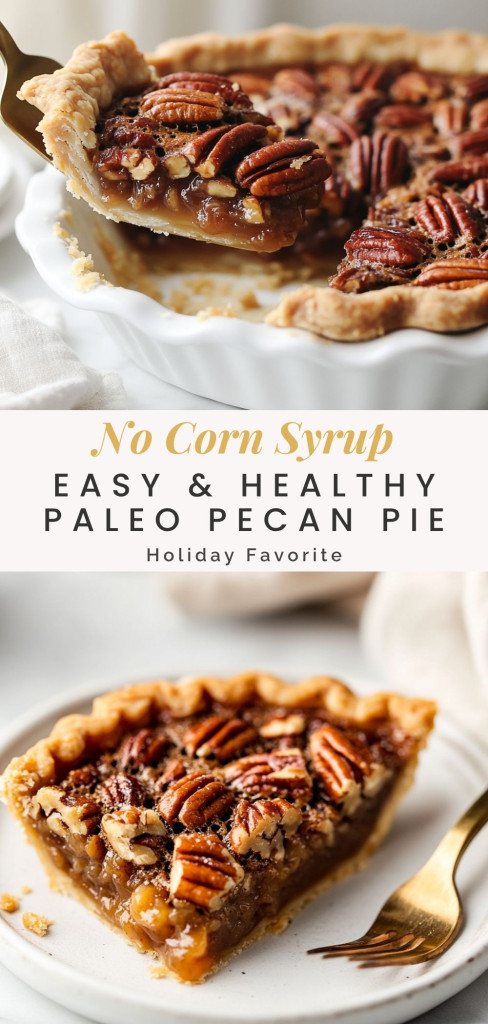
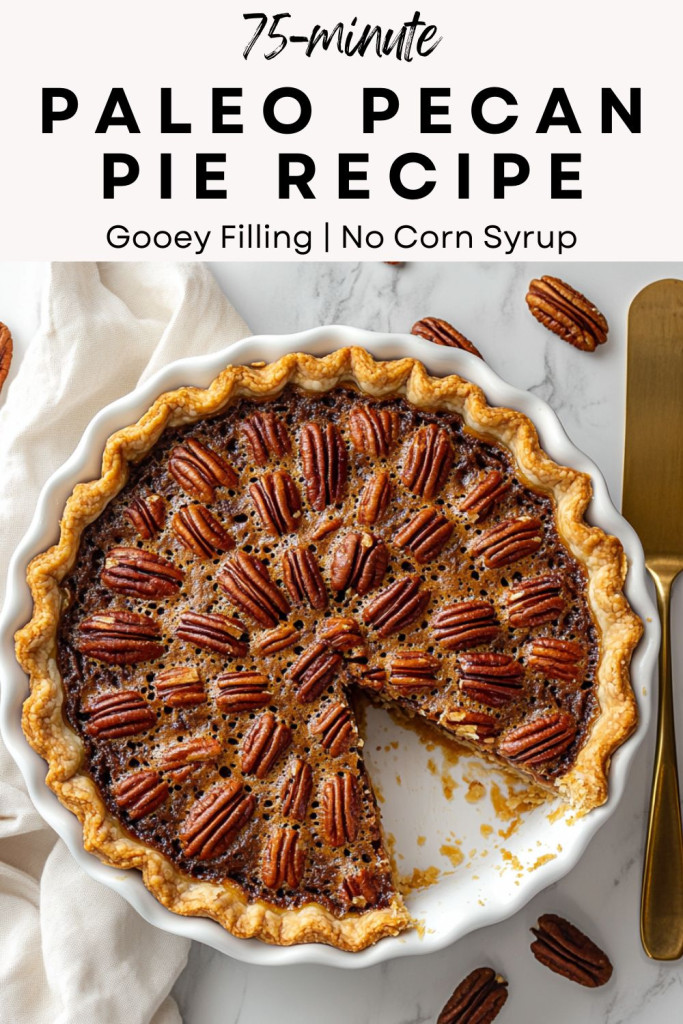
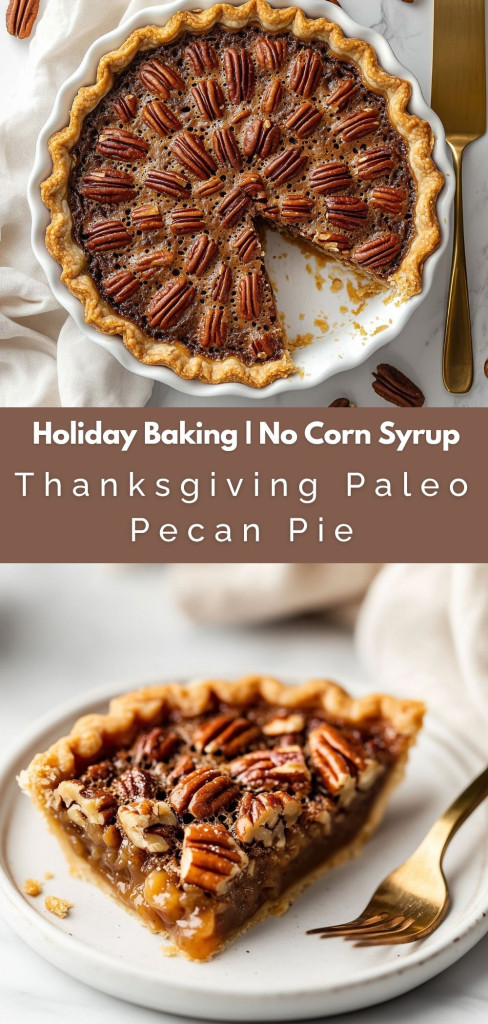
I didn’t grow up thinking of pecan pie as something I could actually eat. Every version I ran into at holiday tables was a slab of corn syrup with a few nuts floating on top — sickly sweet in a way that made my teeth ache after two bites. For years I’d take a sliver to be polite and then go looking for the fruit salad.
Then a few Novembers ago I got stubborn about it. I wanted to know whether pecan pie was actually bad, or whether I’d just been eating bad pecan pie. Turns out it was the second thing. Swap the corn syrup for real maple syrup, use coconut sugar instead of white, build the crust from almond flour, and you end up with something that tastes more like pecan pie than the original — deeper, more caramelly, with the nuttiness of the pecans finally getting a chance to come forward instead of drowning.
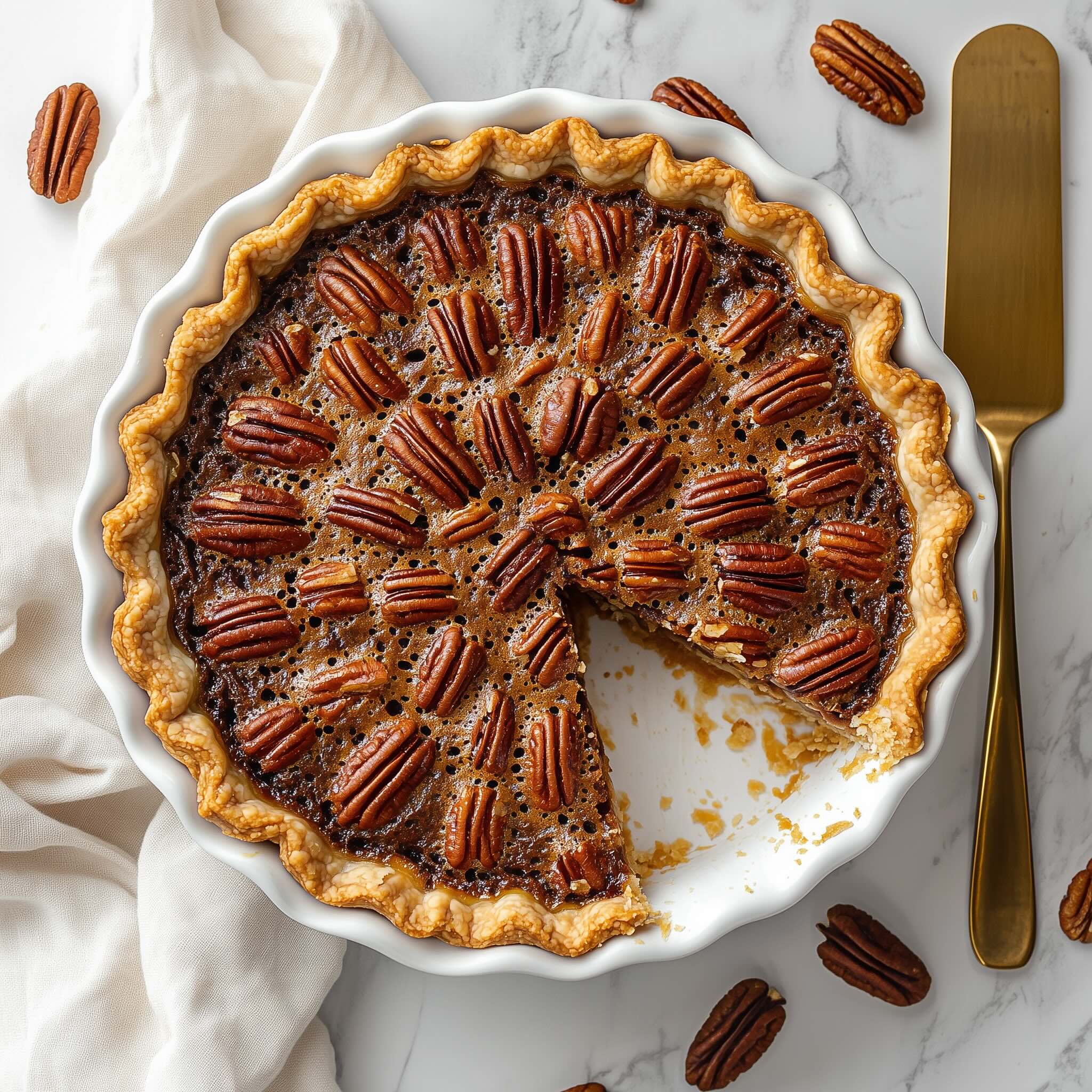
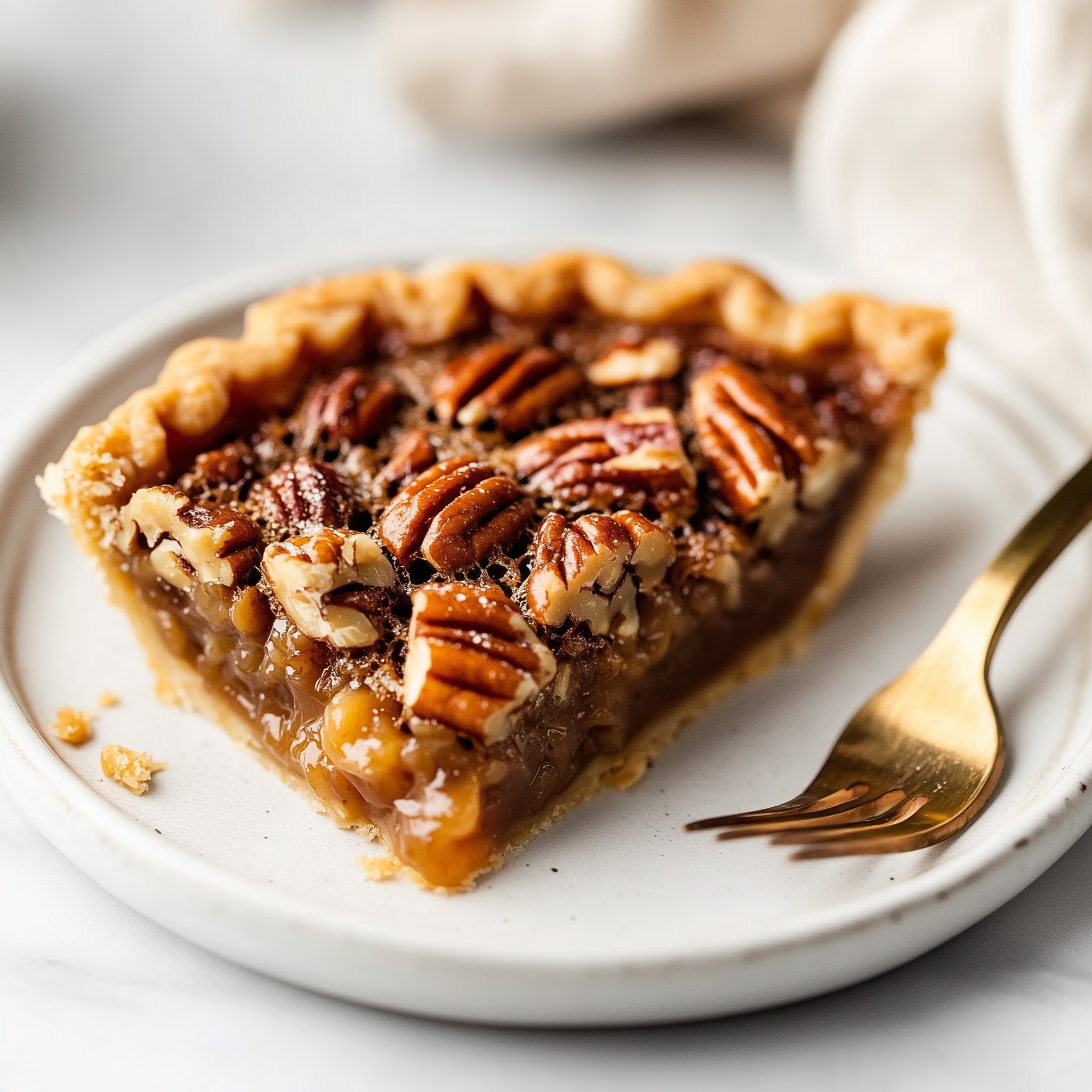
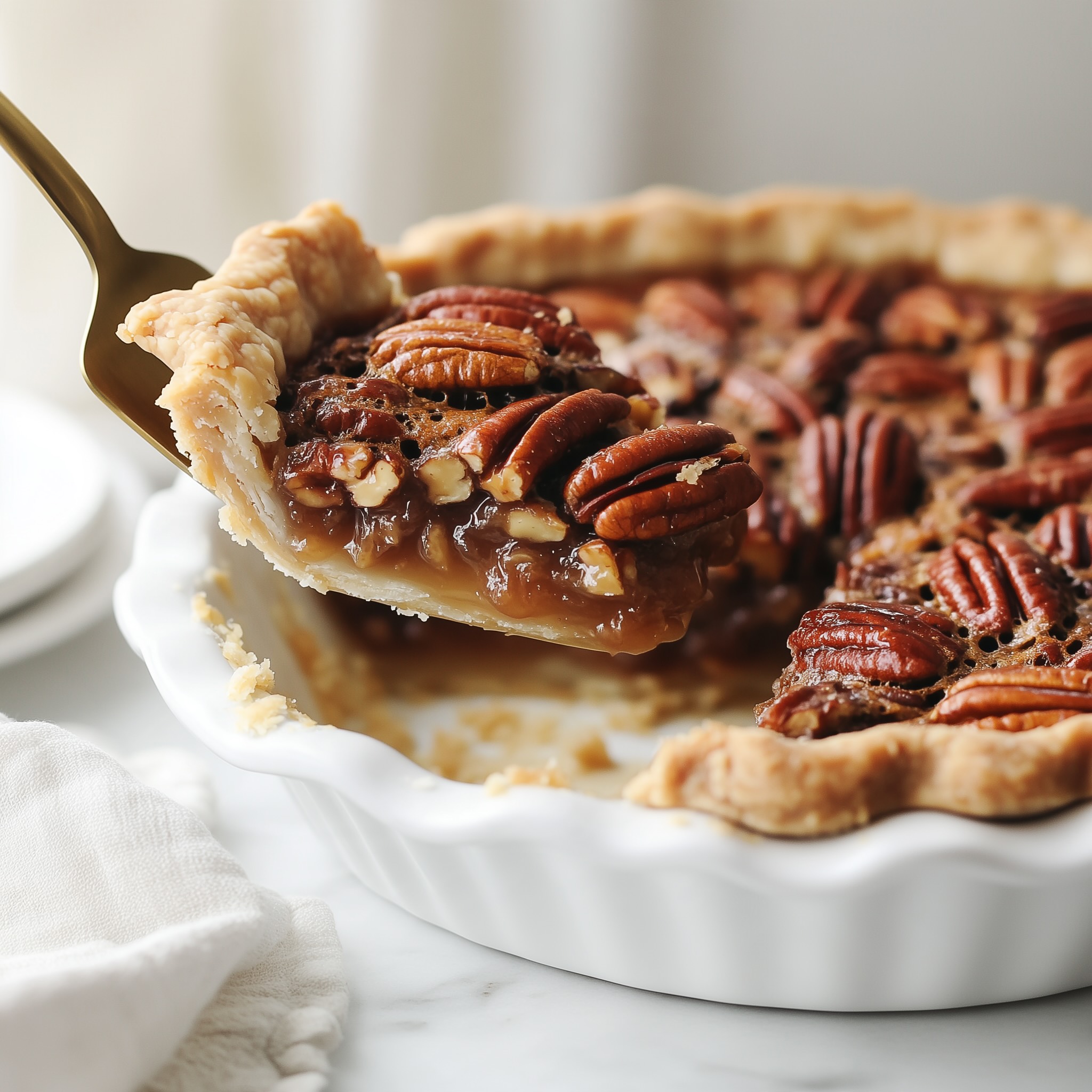
This paleo pecan pie without corn syrup has been my Thanksgiving contribution ever since. It’s gluten-free, dairy-free, grain-free, and completely free of refined sugar, but nobody has ever guessed that at the table. What they notice is that the filling is gooey without being cloying, the crust is genuinely short and buttery-tasting, and the pecans on top go crackly and toasted in the oven. It’s still dessert — I’m not going to pretend a slice of pie is a health food — but it’s dessert made from ingredients you can pronounce.
Why This Recipe Is So Good
The maple syrup does something corn syrup can’t. Corn syrup is there purely for texture — it’s flavorless sugar that keeps things from crystallizing. Pure maple syrup does that same structural job and brings caramel, vanilla, and a faint smokiness along with it. You’re getting flavor from an ingredient that used to be doing nothing.
The filling actually sets. This is the number one complaint with maple-based pecan pies, and the fix is simple: you reduce the syrup on the stove before it ever touches the eggs. Five minutes at a real boil concentrates it enough that the pie firms up into proper sliceable custard instead of soup. I also add a spoonful of tapioca flour as cheap insurance.
The almond flour crust is press-in, not roll-out. No chilling discs of dough, no flouring the counter, no cracked edges you have to patch. You dump everything in a bowl, press it into the pan with your fingers, and you’re done in five minutes. It bakes up short and sandy in the best way — closer to shortbread than a traditional flaky crust, which honestly suits a rich filling better.
It’s genuinely paleo, top to bottom. A lot of “paleo pecan pie” recipes online have a paleo filling sitting inside a conventional wheat crust. This one is grain-free the whole way through, which matters if you’re actually eating this way and not just avoiding refined sugar.
It’s a make-ahead dessert. Pecan pie is one of the few desserts that’s better the next day. The filling continues to set overnight and the flavors deepen. If you’re hosting, this is one less thing to do on the day.
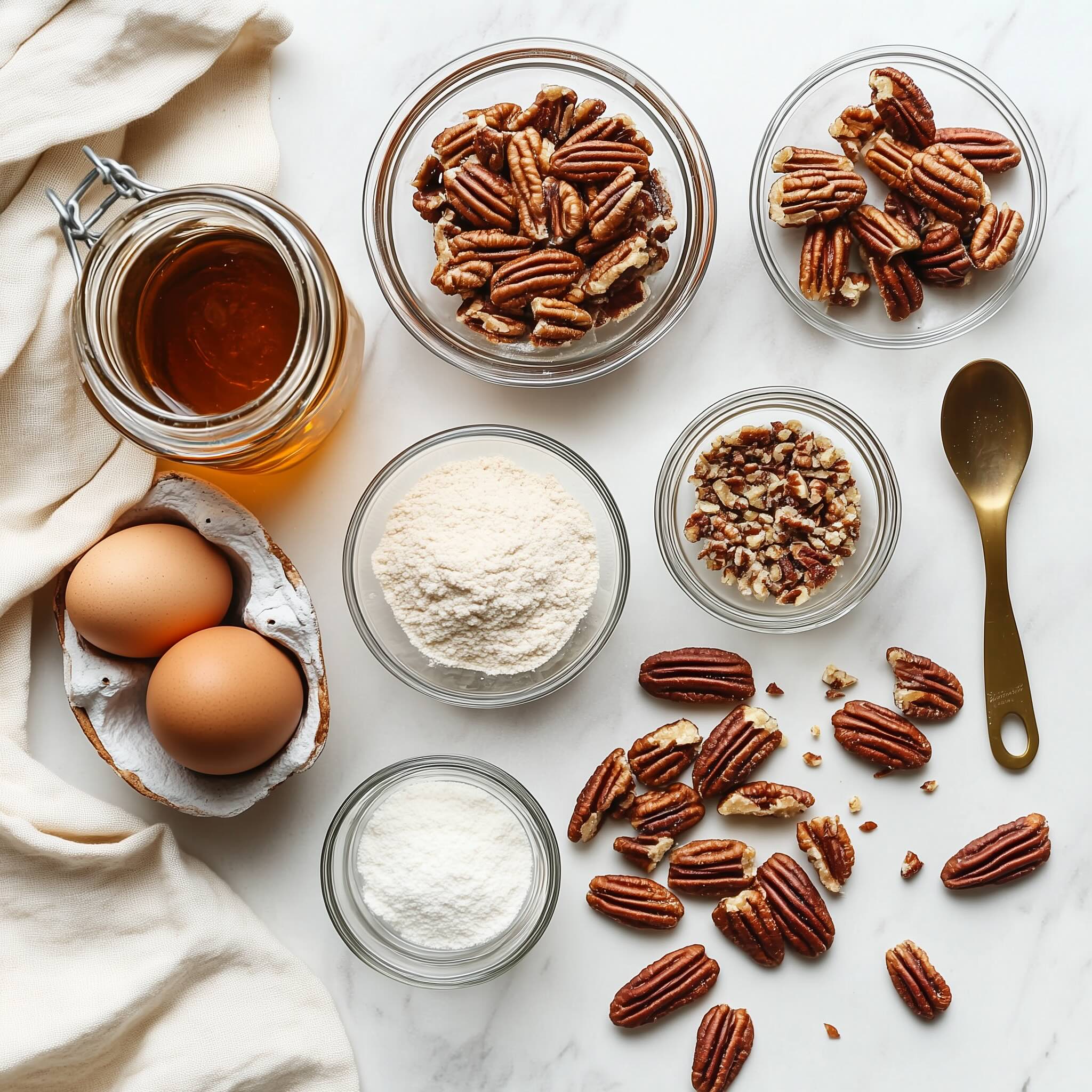
2 cups blanched almond flour — Blanched and superfine, not almond meal. Almond meal has the skins in it and makes a gritty, speckled crust. Bob’s Red Mill Super-Fine is my default.
¼ cup tapioca flour — Also sold as tapioca starch. This gives the crust a little stretch and stops it from being purely crumbly.
¼ teaspoon fine sea salt
¼ cup refined coconut oil, solid but soft — Refined, not virgin, unless you want a coconut note. Ghee works beautifully here too if dairy isn’t an issue for you.
1 cup pure maple syrup — The real stuff, not pancake syrup. I reach for Grade A Dark (formerly Grade B) because the flavor is bolder and stands up to the pecans. Don’t substitute honey or agave here; both change how the filling sets and honey turns bitter at these temperatures.
½ teaspoon fine sea salt — Sounds like a lot. It isn’t. Salt is what keeps the pie from tasting flat and one-note.
2 cups pecan halves — One cup roughly chopped for the bottom layer, one cup left whole for the top.
How to Make Paleo Pecan Pie Without Corn Syrup
Step 1: Make the crust dough
Preheat your oven to 350°F and position a rack in the center. In a medium bowl, whisk together the almond flour, tapioca flour, and salt. Add the coconut oil, egg, and maple syrup, then mix with a fork or your hands until a soft, cohesive dough forms. It should hold together when you squeeze it — if it’s still sandy, work it another 30 seconds before adding anything.
Step 2: Press and par-bake the crust
Press the dough evenly into the bottom and up the sides of a 9-inch pie dish. A flat-bottomed measuring cup helps get the base level. Prick the bottom a few times with a fork, then bake for 12 to 14 minutes, until the edges are just turning golden. Set it on a rack while you make the filling — it doesn’t need to cool completely.
Step 3: Boil the maple syrup
This is the step that makes or breaks the pie, so don’t shortcut it. Pour the maple syrup into a medium saucepan and bring it to a boil over medium heat. You want a genuine rolling boil with bubbles across the entire surface, not a lazy simmer at the edges. Let it boil for a full 5 minutes, then pull it off the heat. Use a bigger pot than you think you need — maple syrup foams up dramatically.
Step 4: Stir in the coconut sugar and oil
Off the heat, whisk in the coconut sugar and coconut oil until both fully dissolve. Then let the mixture sit for about 5 minutes. This cooling window matters — if you add eggs to boiling syrup you’ll get sweet scrambled eggs and there’s no coming back from that. The mixture should be warm to the touch, not hot.
Step 5: Temper in the eggs
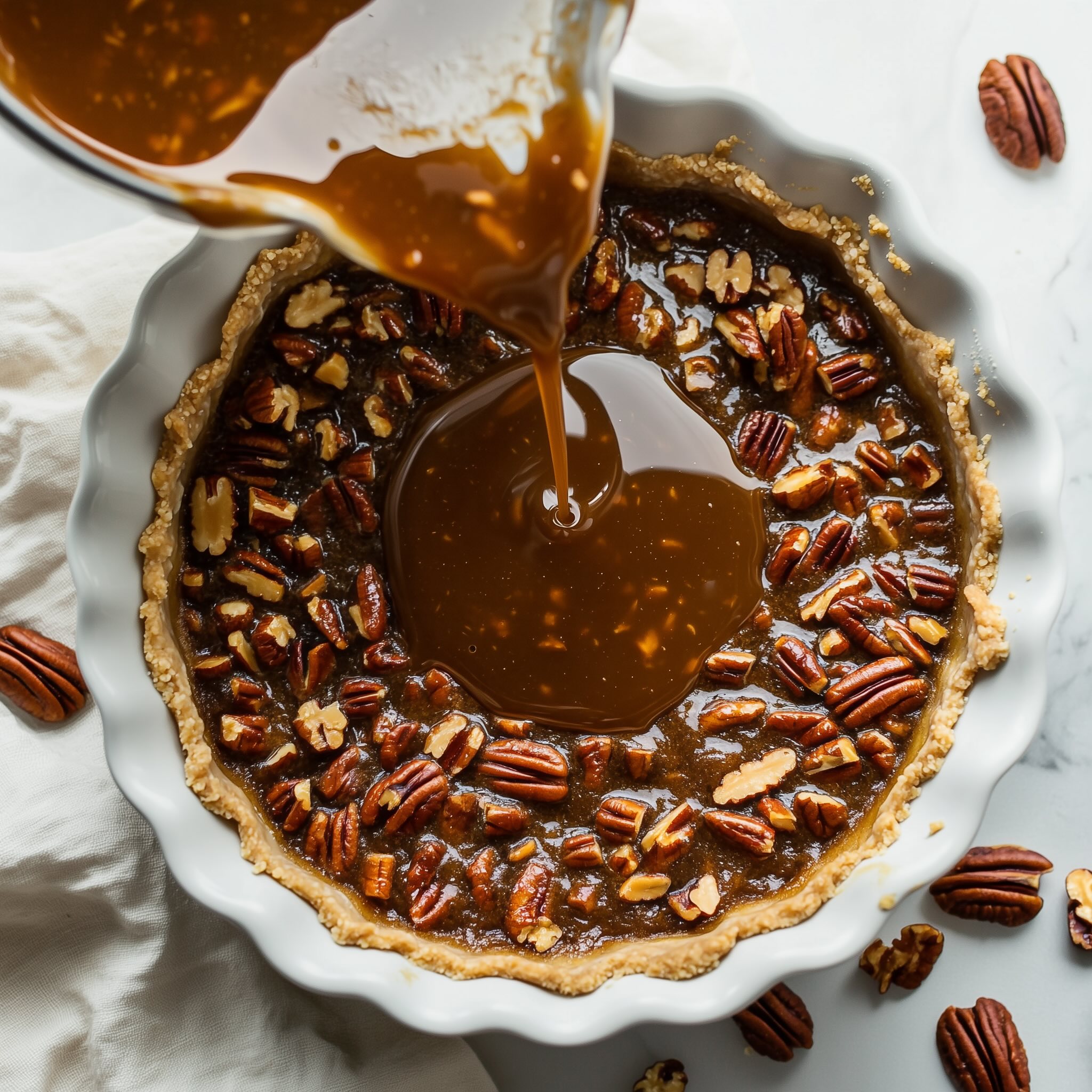
Whisk the eggs in a separate bowl until they’re completely uniform with no streaks of white. Whisk the tapioca flour into the eggs. Now, whisking the syrup constantly, pour the eggs in a thin, steady stream. Keep whisking until the filling looks smooth and glossy. Stir in the vanilla and salt.
Step 6: Layer the pecans and pour
Scatter the 1 cup of chopped pecans evenly across the bottom of the par-baked crust. Pour the warm filling over the top. Putting chopped nuts underneath gives you pecan in every single bite rather than just a nutty lid over plain custard.
Step 7: Arrange the pecan topping
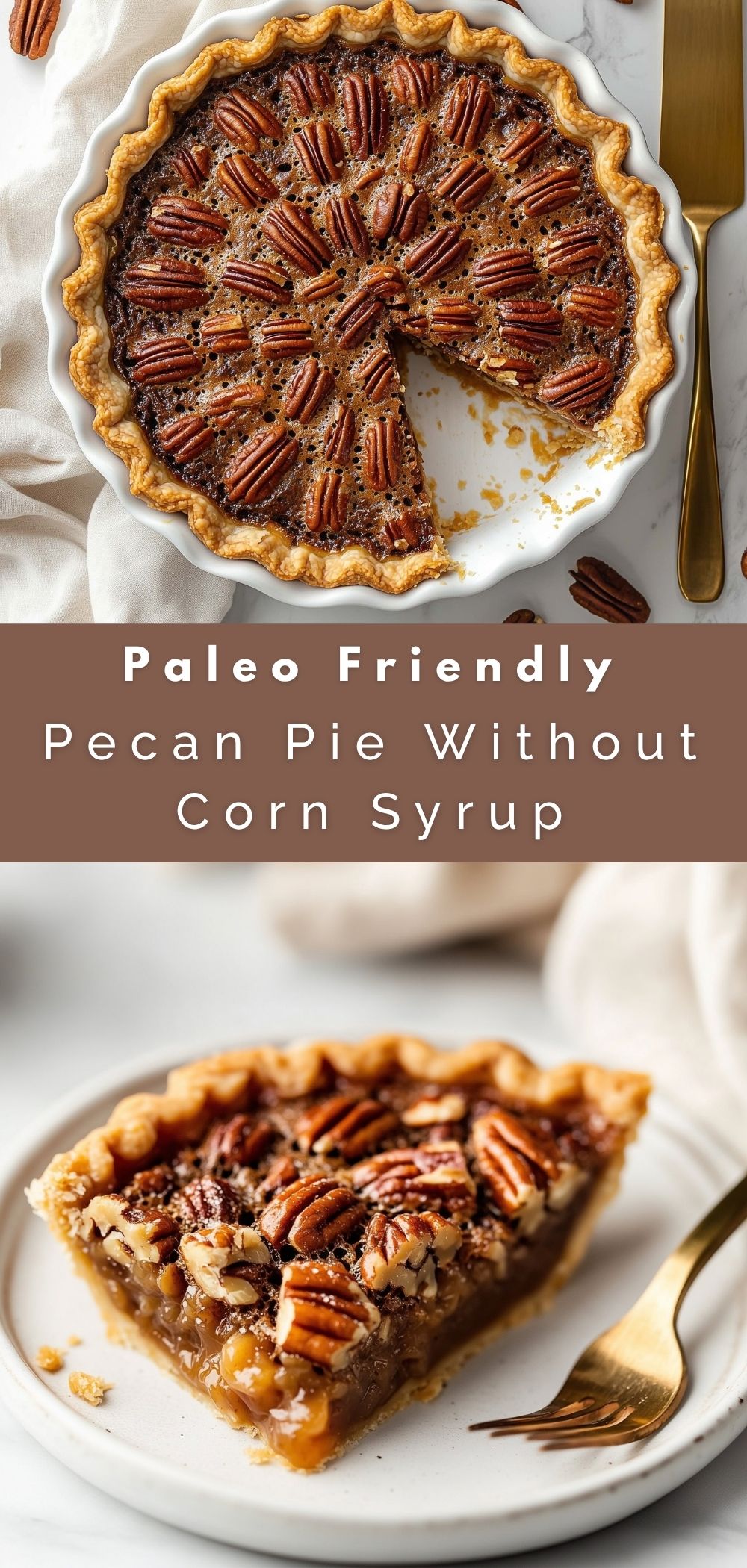
Arrange the remaining cup of pecan halves on top however you like — I do concentric rings working from the outside in, but a random scatter looks lovely too. Work reasonably quickly and don’t press them down. They’ll float and settle into place on their own.
Step 8: Bake
Set the pie on a baking sheet and bake at 350°F for 35 to 40 minutes. You’re looking for a surface that’s set and puffed with only a slight wobble at the very center — think set jello, not liquid. Check at the 25-minute mark. If the pecans or the crust edge are browning faster than the center is setting, tent loosely with foil for the rest of the bake. The pie will puff up alarmingly in the oven and then settle as it cools. That’s normal.
Step 9: Cool completely, then slice
Let the pie cool on a wire rack for at least 3 hours before you cut it. I know. But the filling keeps setting the whole time it’s cooling, and a warm pecan pie will run all over the plate no matter how well you baked it. If you want to be really certain of clean slices, chill it for an hour after it hits room temperature.
Tips for Success
Boil the syrup the full five minutes. If your pie doesn’t set, this is almost always why. Set a timer and walk away — resist the urge to eyeball it.
Check your maple syrup label. It should list exactly one ingredient. Anything described as “pancake syrup” or “table syrup” is corn syrup with maple flavoring, which rather defeats the purpose.
Let the syrup cool before the eggs go in. Five minutes off the heat is usually enough. If you want to be precise, an instant-read thermometer should show under 160°F.
Whisk the eggs really well. Any unincorporated white will show up as a pale streak in the finished filling.
Use a light-colored pie dish. Dark metal pans absorb more heat and can scorch the almond flour crust before the center is done. Ceramic, glass, or light metal all work well — glass and ceramic may need an extra 3 to 5 minutes.
Watch the crust edge.Almond flour browns faster than wheat flour. If the rim is getting dark early, a foil collar solves it.
Toast the pecans first if you want more depth. Ten minutes at 350°F on a dry sheet pan before they go in the pie. Optional, but it makes a noticeable difference.
Storage Instructions
Room temperature: Loosely covered, the pie keeps on the counter for up to 2 days. The crust stays crispest this way.
Refrigerator: Cover tightly and refrigerate for up to 5 days. The filling firms up considerably when cold, which makes for very tidy slices. Let it sit out for 20 to 30 minutes before serving so the texture softens back up.
Freezer: This pie freezes beautifully for up to 3 months. Cool it completely, wrap the whole pie (or individual slices) in plastic and then foil, and freeze. Thaw overnight in the fridge, then bring to room temperature. You can also warm slices in a 300°F oven for about 10 minutes to revive the crust.
Make-ahead: Bake it a full day in advance. Honestly, day-two pecan pie is better than day-one pecan pie — the filling is more cohesive and the flavors have had time to settle together.
Variations
Chocolate pecan pie. Scatter ⅓ cup of dairy-free dark chocolate chips over the crust along with the chopped pecans. The chocolate melts into the bottom layer and turns this into a completely different dessert. If you’re a fan of that combination, you’ll probably also like these fudgy paleo almond butter brownies.
Bourbon pecan pie. Stir 2 tablespoons of bourbon in with the vanilla. The alcohol mostly cooks off and leaves behind a warm, oaky note that’s very good against the maple. (No longer strictly Whole30 or paleo, but worth knowing about.)
Salted maple pecan pie. Sprinkle flaky sea salt over the top right when the pie comes out of the oven. Simple, and it makes the caramel notes pop.
Mixed nut pie. Swap half the pecans for walnuts or macadamias. Walnuts bring a slight bitterness that cuts the sweetness nicely.
Pumpkin spice pecan pie. Add 1½ teaspoons of pumpkin pie spice to the filling for a fall-forward version. If pumpkin spice is your thing this time of year, my paleo chocolate chip pumpkin bread is another good one to have on hand.
Pecan pie bars. Press the crust into a parchment-lined 9×9 pan, par-bake for 15 minutes, pour in the filling, and bake for 30 to 35 minutes. Easier to serve at a party than slices of pie.
FAQ
Why is my pecan pie runny in the middle?
Nine times out of ten the maple syrup didn’t boil long enough. It needs a full 5 minutes at a genuine rolling boil to reduce enough to set. The other common cause is underbaking — the pie should have only a small wobble at the very center when you take it out, not a wave that moves across the whole surface. And if you sliced it warm, that’s the answer right there. Give it the full 3-hour cool.
Can I make this pecan pie without eggs?
Not with this recipe. The eggs are what set the custard, and flax or chia eggs won’t do the same job here — you’ll end up with a very sweet nut soup. If you need an egg-free version, look for a recipe built specifically around a starch or coconut cream base rather than trying to convert this one.
Is pecan pie paleo?
Traditional pecan pie is not — it’s built on corn syrup, refined white sugar, butter, and a wheat flour crust. This version swaps every one of those out: maple syrup and coconut sugar for the sweeteners, coconut oil for the butter, and an almond flour crust in place of the wheat. That makes it paleo-friendly, grain-free, gluten-free, and dairy-free.
Can I use a store-bought crust?
Absolutely, and I do it when I’m short on time. Just know that most store-bought gluten-free crusts contain rice flour or starches, so the pie won’t be strictly paleo anymore. It’ll still be gluten-free and dairy-free, which is enough for most people. If you go this route, skip the par-baking step unless your package directions say otherwise.
Can I use honey instead of maple syrup?
I don’t recommend it. Honey behaves differently under heat — it browns faster and can turn bitter when reduced, and the flavor is assertive enough that it overwhelms the pecans. Maple is doing real structural work here, not just adding sweetness.
What can I use instead of coconut sugar?
Maple sugar is the closest paleo swap, one for one. If you don’t need it to be paleo, brown sugar works in the same quantity — just know the pie will taste noticeably sweeter, since coconut sugar is a bit less sweet than cane.
Final Thoughts
If corn syrup has been the reason you skip pecan pie, this is your recipe. The maple syrup does everything the corn syrup was doing and brings actual flavor with it, the almond flour crust comes together in five minutes flat, and the whole thing is gluten-free, dairy-free, and paleo without tasting like a compromise.
The only real rule is patience — boil the syrup all the way, and let the pie cool all the way. Do those two things and it’ll come out perfect.
If you make this paleo pecan pie without corn syrup, I’d love to hear how it went. Leave a star rating and a comment below, and if you’re building out a holiday dessert lineup, my best paleo chocolate chip cookies and this vegan cannoli cake are both crowd-pleasers. For something simpler on a weeknight, the coconut flour cookies take about 20 minutes start to finish.
This paleo pecan pie without corn syrup is sweetened with pure maple syrup and coconut sugar over a press-in almond flour crust. Rich, gooey, and it sets perfectly every time. Gluten-free, dairy-free, grain-free, and refined sugar-free.
2cupspecan halves, divided (1 cup roughly chopped, 1 cup left whole)
Instructions
Preheat. Heat the oven to 350°F with a rack in the center position.
Make the crust.Whisk the almond flour, tapioca flour, and salt in a medium bowl. Add the coconut oil, egg, and 1 tsp maple syrup. Mix until a cohesive dough forms.
Press and par-bake. Press the dough evenly into the bottom and up the sides of a 9-inch pie dish. Prick the base with a fork. Bake 12–14 minutes, until the edges are lightly golden. Set aside.
Boil the syrup. In a medium saucepan over medium heat, bring the 1 cup maple syrup to a full rolling boil with bubbles across the entire surface. Boil exactly 5 minutes, then remove from heat. Do not shorten this step or the pie will not set.
Add sugar and fat. Off the heat, whisk in the coconut sugar and 3 Tbsp coconut oil until dissolved. Let cool 5 minutes, until warm rather than hot.
Temper the eggs.Whisk the tapioca flour into the beaten eggs. Whisking the syrup constantly, pour the egg mixture in a slow, thin stream. Whisk until smooth and glossy, then stir in the vanilla and salt.
Fill the crust. Scatter the 1 cup chopped pecans over the par-baked crust. Pour the filling over the top.
Top the pie. Arrange the remaining 1 cup pecan halves on the surface in your preferred pattern. Don’t press them down.
Bake. Set the pie on a baking sheet and bake 35–40 minutes, until the surface is set and puffed with only a slight wobble at the very center. Tent with foil if the crust or pecans brown too quickly.
Cool completely. Cool on a wire rack at least 3 hours before slicing. The filling continues to set as it cools. Chill an additional hour for the cleanest slices.
Notes
Setting issues? The number one cause of a runny pecan pie is under-boiling the maple syrup. Time it.
Pie dish matters. Light-colored ceramic, glass, or metal is ideal. Dark metal pans can scorch the almond flour crust. Glass and ceramic may need 3–5 extra minutes.
Make-ahead: Bake up to 2 days ahead and refrigerate, or freeze the whole pie up to 3 months. Thaw overnight in the fridge.
Store-bought crust: Works fine, but most gluten-free crusts contain rice flour or starch, so the pie is no longer strictly paleo.
Eggs are required. Flax or chia eggs will not set this filling.